


Multi-Agent Systems
Pipelines of specialised agents, each with a contract, a budget and a trace.
14Labs builds reliable AI solutions by combining research, engineering, and evaluation. We create intelligent agents, retrieval systems, and machine learning products designed for real-world users.
We don't just build AI systems. We measure them. Research guides our decisions. Evaluation validates our systems. Engineering turns ideas into reliable products that perform in the real world. That is the difference between a demo and a product.
We test the system regularly to understand what is improving and what needs attention.
We track how the system works so problems can be identified and fixed quickly.
We monitor speed and usage costs to keep the system reliable and practical.
Pipelines of specialised agents, each with a contract, a budget and a trace.
The right context in front of the model — measured, not guessed.
Models chosen for the decision they support, not for the hype cycle.
Golden sets, regression gates and tracing, so every change is measurable.

What we measured, what failed and what we would do again.
15+
Projects Delivered
In production, not pilots
10+
Client Teams
Across four industries
4+
Years Building
Since before the agent boom
95%
Satisfaction
Measured post-engagement
Building an AI prototype is only the beginning. The real challenges appear when systems need to become reliable, scalable, and ready for real users.
Moving from a controlled prototype to a real product requires handling unpredictable users, data, and scale. Most pilots die between the notebook and the first real user.
See our approach ›Median against tail latency, once the traffic is real.
AI systems can change from one release to the next without anyone knowing what actually improved. Good evaluation makes those changes measurable.
How we approach it ›Per-suite change across one release. The blend moved +0.01.
Your knowledge may live across documents, databases, wikis, and internal tools. The challenge is finding the right information when the user needs it.
Our approach ›Top-k retrieval for one query. The answer ranked twelfth.
Complex workflows can become difficult to debug, trace, and control. The first step is understanding what each agent is doing and why.
Explore the practice ›One request on a clock. Four of twelve seconds were retries.
We research, experiment, and measure before committing to a production build. What we learn helps us understand what works, what doesn't, and what is worth building.
Our research explores applied machine learning across different domains. The methods we develop inform how we approach real-world AI systems.
Faiza Mehmood, Muhammad Nabeel Asim, Aamir Mehmood, Waqar Mahmood, Sebastian Vollmer, Mehmood Ul Haq, Faisal Ali, Andreas Dengel
Muhammad Muteeb Butt, Mehmood ul Haq, Varma KVVSSN, Hossein Laieghi, Hakan Yavas, Metin U Salamci, Hüseyin Kızıl
Muhammad Muteeb Butt, Sidra Rashid, Mehmood ul Haq, Ayyaz Mustafa, Arshad Iqbal, Hossein Laieghi, Varma KVVSSN, Metin U. Salamci, Enrico Salvati, Hüseyin Kızıl
Real Estate
AI-Driven Commercial Real Estate Site Discovery - Automating hours of manual research into minutes of intelligent analysis

EdTech
Transforming University Admissions with Multi-Agent Intelligence
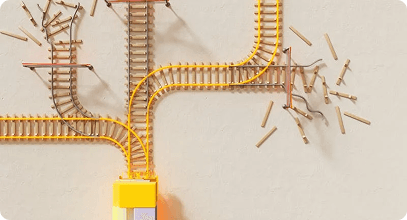
Clear principles. Practical engineering. No unnecessary complexity.
We define how success will be measured from the start, so we can see what is improving and what needs to change.
We use the simplest approach that can solve the problem well. We add complexity only when it brings a clear improvement.
The code, infrastructure, evaluation, and documentation stay with you. We don't build systems that depend on us to keep working.
Send the shape of the problem, the data you have and what a good outcome would look like. We will reply with an honest read on whether it is worth building — including when it is not.